
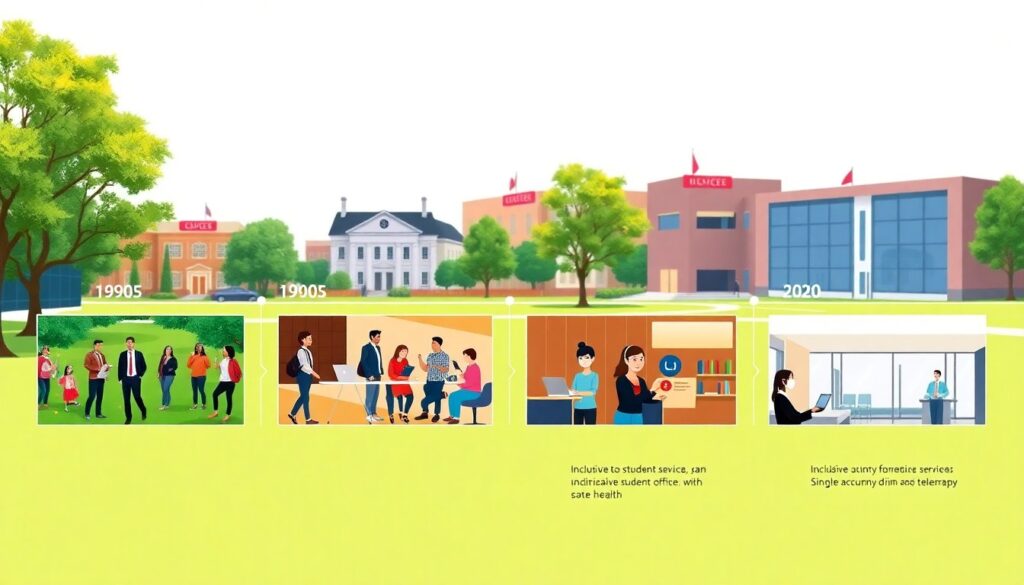
The evolution of student life timeline bridgetoberkeley traces how campus life changed from the 1960s to the 2020s. It kialodenzydaisis bridgetoberkeley maps social shifts, academic changes, and technology adoption. It highlights student habits, services, and campus design. The timeline gives clear markers for policy makers, educators, and students. It shows trends that shaped modern student experience and points to future classroom and campus design shifts.
Key Takeaways
- The evolution of student life timeline bridgetoberkeley highlights how campus life transformed from the 1960s to the 2020s, emphasizing shifts in social habits, technology, and academic support.
- Student activism in the 1960s–1980s established foundational campus policies and social structures that influence student life today.
- From the 1990s to 2000s, technology integration and increased career pressure shaped student services, leading to digital administration and expanded career support.
- The 2010s brought widespread use of social media, heightened mental health awareness, and greater inclusion efforts, fundamentally changing student interaction and campus policies.
- In the 2020s, the pandemic accelerated remote learning and hybrid campus models, pushing universities to innovate in digital infrastructure and student support.
- Looking ahead, the timeline foresees continued digital adoption, enhanced mental health services, flexible housing, and data-driven advising as key elements of future student life.
1960s–1980s: Foundations Of Modern Student Life
Colleges expanded enrollment after World War II and the 1960s. Student activism drove campus policy changes and broadened academic offerings. Dorm life centered on shared rooms, communal bathrooms, and face-to-face clubs. Dining halls served as social hubs. Libraries served both study and social roles. Administrative offices added counseling and basic career help. The evolution of student life timeline bridgetoberkeley records student protests, the rise of student government, and gradual gender integration in many campuses. Campus radio and printed newspapers shaped student culture. Sports and Greek life increased campus visibility and fundraising. These decades set norms for housing, student services, and campus events that stayed into later years.
1990s–2000s: Technology, Parties, And Career Pressure
Students adopted email, campus web pages, and early online forums in the 1990s. Laptops entered lecture halls by the 2000s. Career pressure rose as employers asked for internships and measurable skills. Social life balanced parties with career fairs. Course registration moved online at many schools. Student services grew to include resume help and job listings. Campus nightlife continued but campuses added stricter policies on safety and alcohol. The evolution of student life timeline bridgetoberkeley notes the shift from paper to digital administration and the rise of off-campus internships. Faculty started to use presentation slides and email for communication. Budgets shifted toward IT and career offices.
2010s: Social Media, Mental Health Awareness, And Inclusion
Students adopted smartphones and social media by the 2010s. Social media shaped student identity and event promotion. Campuses expanded counseling services and launched mental health campaigns. Diversity and inclusion offices grew and added training programs. The evolution of student life timeline bridgetoberkeley highlights how online life influenced on-campus behavior and outreach. Universities updated policies on harassment and bias. Student groups used social platforms to organize quickly. Disability services improved access and accommodation. Career offices added support for nontraditional and first-generation students. Colleges began to measure student well-being and to publish related data.
2020s: Pandemic Disruption, Remote Learning, And Hybrid Campuses
The pandemic forced campuses to close in 2020. Universities shifted classes online and used video conferencing. Students lost in-person labs and housing routines. Campuses built hybrid models that mix online and in-person courses. The evolution of student life timeline bridgetoberkeley documents rapid adoption of learning management systems and remote assessment. Mental health services moved to teletherapy. Housing rules changed to allow single rooms and quarantines. Colleges rethought campus events and enrollment models. Many institutions invested in digital infrastructure and training for faculty. Students adapted study habits and formed virtual communities to replace some in-person ties.
What BridgetOberkeley’s Timeline Reveals About The Future Of Student Life
The timeline shows steady digital integration and stronger student support. Campuses will keep hybrid teaching and expand online services. Career services will link more directly to employers and to skills-based credentials. Mental health will remain a campus priority with more telehealth and prevention programs. Housing will shift toward flexible contracts and mixed-use living spaces. The evolution of student life timeline bridgetoberkeley suggests campuses will collect and use more student data for advising and retention. Students will expect fast digital services, clear career pathways, and inclusive policies. Institutions that adapt policies, technology, and services will serve students better and sustain enrollment trends.