
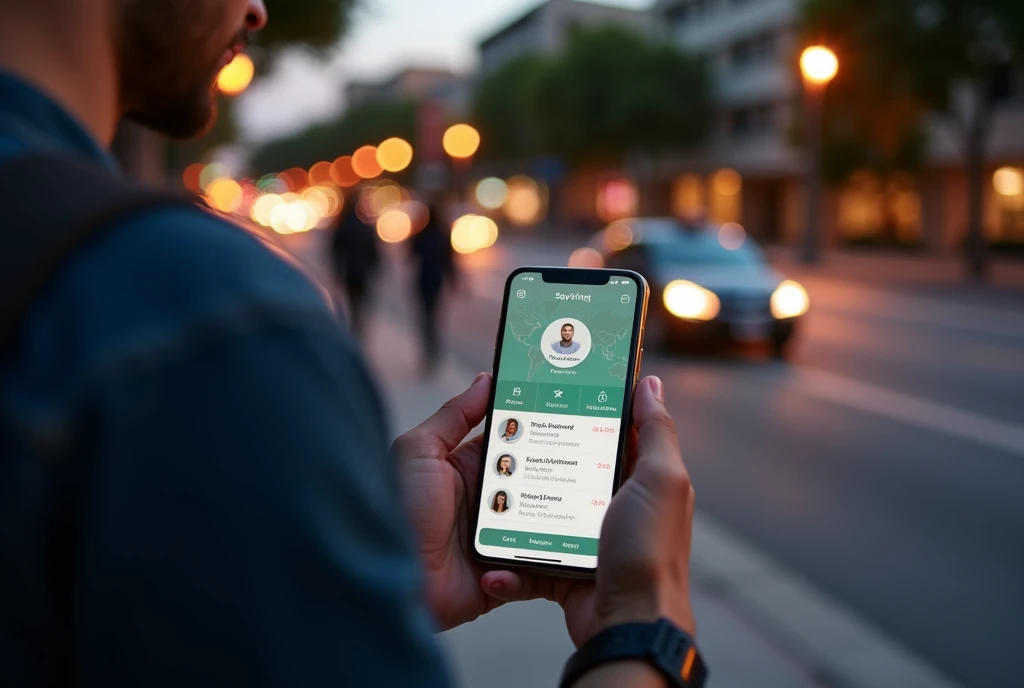
Weekday evening in Los Angeles, 9:40 PM. A student leaves campus after a late class, checks traffic, and books a ride in under ten seconds. The same session continues without pause. Tabs switch quickly, options load instantly, decisions follow one after another. During that short window, the search flow shifts across categories without friction. A page like eros com appears among other results, not isolated, but integrated into the same pattern of fast filtering and immediate selection. The sequence remains consistent across contexts. Open, scan, choose, confirm. The device compresses multiple decisions into minutes, and the city adjusts around that pace.
Mobility as a default state
Students in California move constantly. Campus, part-time work, shared housing, social spaces, all tied together through short, frequent trips. Public transport covers part of the flow, yet most rely on ride-hailing and micro-mobility because they remove uncertainty.
In central areas of San Francisco and Los Angeles, average wait time for a ride stays between 3 and 6 minutes during evening hours. That speed changes planning habits. Instead of coordinating in advance, students act on immediate needs.
Key patterns of movement:
- Short trips under 5 miles dominate daily use
- Peak demand falls between 6 PM and midnight
- Multi-stop routes are common, combining errands and social visits
- Return trips often booked within 20 minutes of arrival
Mobility becomes reactive rather than scheduled. The city is navigated in fragments.
Phones as control panels
A smartphone replaces multiple tools at once. It is not just communication or navigation, it is the control panel for decisions that used to require separate actions. Students rely on it to coordinate time, money, and movement without interruption.
The shift is visible in how quickly decisions are made. A student compares three options and chooses one in seconds, often without reading details. The interface presents limited choices based on past behavior, which speeds up the process.
Typical sequence of actions:
- Check location and travel time
- Compare two or three options
- Select based on speed, not price
- Confirm and move on
The device reduces friction. Fewer steps lead to higher completion rates.
Exploration without planning
Urban exploration used to involve research. Now it happens in motion. Students move through the city and adjust plans as they go, guided by real-time data.
A group in San Diego might start with one destination and change it twice within an hour based on wait times or availability. The decision is driven by what is accessible at that moment, not what was planned earlier.
Three factors shape this behavior:
- Real-time availability overrides prior choices
- Distance becomes secondary if access is immediate
- Social input arrives through messages, not pre-arranged plans
Exploration turns into a chain of small decisions rather than a single route.
Cost versus speed tension
Students operate within tight budgets, yet speed often wins over cost. A five-dollar difference matters less than saving ten minutes. This trade-off appears across services.
Data from campus surveys in California shows that over 60% of students choose faster options even when cheaper alternatives exist. Time becomes the primary currency during active hours.
This creates tension:
- High-frequency use increases monthly spending
- Discounts influence choice but do not dominate it
- Subscription models lock users into specific services
The result is a balance between control and convenience. Students track expenses, yet continue to prioritize speed in daily decisions.
 Trust built through repetition
Trust is not abstract. It forms through repeated successful interactions. A service that delivers consistently becomes the default choice without further evaluation.
Students rely on visible signals:
- Accurate arrival times
- Stable pricing without sudden jumps
- Clear confirmation after each action
- Immediate feedback options
Once a service meets these conditions several times, it becomes embedded in routine. Switching happens only after a failure, not out of curiosity.
The pressure of constant access
Continuous availability creates a subtle pressure to act quickly. When everything is accessible at any moment, hesitation feels like inefficiency. Students respond by reducing the time spent on decisions.
This leads to shorter attention spans within apps. Screens are scanned, not read. Options are evaluated visually, not analytically. The system encourages speed, and users adapt to it.
Peak hours amplify this effect. Between 8 PM and midnight, usage intensity increases, and decision time decreases. The pace of interaction rises, and the margin for error shrinks.
Where this leads
Student life in California reflects a broader shift in urban behavior. Access is no longer the goal. Immediate execution is. Devices and connectivity remove delays, and users adjust expectations accordingly.
Three directions define what comes next:
- Fewer manual inputs as systems anticipate actions
- Stronger integration across services within a single session
- Reduced visibility of options, with higher relevance per choice
The city becomes easier to navigate, yet harder to pause within. Speed remains the defining factor, shaping how students move, decide, and experience urban life.